Friday, June 6, 2014

Bertone Cars Wallpaper

The Italian based "Bertone" or formally named "Gruppo Bertone" has had an outstanding and exceptional influence on the automotive industry far away from its native country of origin of Italy. Bertone's influence on a stable of automotive extended over a whole different geographic and company automotive manufactures across the globe - whether if be Italian cars such as Alfa Romeo, Lamborghini, Fiat or European cars such as Mercedes Benz or the Swedish Volvo vehicles. To some degree there are family similarities in the designs across the mix. This would be expected. On the other side of the coin each Bertone design project is a unique creation from inception to fruition.
With the death of Giuseppe "Nuccio" Bertone in 1997, at the age of 82 a glorious period of Italian car design came to an end. It can be said that before the end of the Second World War, and the period that followed in 1946, that Italian automotive design was plainly a regional event and nothing more. Even if vehicle designs had been downright brilliant little was ever noted or noticed outside of the immediate area and car community of Italy. The world looked to France for coachwork from 1919 to 1938, and might have continued to do so had Communist influenced governments after the war not punitively withheld raw materials from coachbuilders. Italy's communists it seemed were more interested in jobs primarily. As a result, or as a direct initiative, they directly encouraged and nurtured a luxury car industry, in essence moving Italian automotive design to a center stage.
It can be best said that Bertone was one of the first carozzerie (coachbuilders_ to move into "series" production, with the construction of 200 Bertone MGs for Wacky Arnolt of Chicago starting in 1952. These orders then directly led to the production of some 350 Arnolt-Bristols and put Bertone in a position to manufacture a small series of coupes for Alfa Romeo, which was then in trouble with clients who had been promised a new car , whose release had been delayed by body tooling. That product - the Giulietta Sprint designed by Alfa's Ferruccio Palamidessit, can be said to have put Bertone on the map forever. More than 40,000 of these classic vehicles were produced before replacement by the Bertone-styled Giulia GT.
Nuccio Bertone was not a designer himself, but he served first and foremost to discover, employ and guide some of the very best automotive designers known. An astute businessman, Bertone owned several anonymously titled companies in the Turin area .Thus as a result of splitting the work, and the pie across several enterprises and unconnected enterprises; he was able to persuade different automobile manufacturers across the board to let him produce automotive vehicles in series for them. Fiat 850 spiders and X-1/9s, Opel Cabriolets, Volvo coupes, and many others came from his factories. In addition his design center also created practical shapes for Japanese Mazda, French Citroen as well as Korean Daewoo among others. It could be said that this was the start of the globally integrated car industry. The country of origin of an automotive product no longer was distinct and mattered so much. The car might be designed in one country, engineered in another and yet be manufactured in yet another country and even be marketed from a different area. Where was the car made? Who knew? In the coming future the direct geographical origins of a car would be even less evident and distinct.
bertone cars wallpaper

Thursday, June 5, 2014

Speed Car of Bugatti

Many people may recall the Bugatti automobile company. The company was founded in the country of France by an Italian man named Ettore Bugatti. He was one of those men that have a strange character that many others would refer to as eccentric. He was also somewhat of a genius. Like many car makers at the time, Bugatti struggled to survive during World War II but that didn't stop them from producing some of the rarest vehicles in the world. After a series of ups and downs the Bugatti name remains today.
The Bugatti Company quickly became known for their well designed and engineered cars. The company participated in the Grand Prix race events that many other auto makers were associated with. They had plenty of success taking part in those races. Bugatti won the very first Monaco Grand Prix. Bugatti tried to go above and beyond what competitor's were doing with their cars. They searched for many ways to work against the disadvantage of weight by making axles of their vehicles different than others. A spring that passed through the axle made such a difference that it was noticed right away by others.
There are certain Bugatti models that were only produced in small numbers. These models of course are incredibly rare and certainly very valuable. These cars date back to the 1930s, before the war began. Only about 2000 of these models still exist throughout the world today. Bugatti made a few different types of cars. They had some that never did make it past the prototype stage but they also had a few others. Some were designed to be regular street cars that anyone could drive. Bugatti was very successful with their racing cars and earned plenty of success and recognition because of them.
During the war Bugatti continued to manufacture cars. They worked hard on a series of race cars that had been greatly anticipated. One of these cars, a supercharged model, was cancelled after Ettore Bugatti passed away. His son had died a number of years earlier when test driving a new model for the company. The auto maker began to experience financial trouble after the death of Ettore. His family member Roland Bugatti made an attempt to resurrect the company in the 1950s. The race car that was designed in that time was unsuccessful and production had to be stopped.
The Bugatti Company did not only produce cars though that is what they are best known for. They also produced airplanes. During this time when vehicle production was not successful, they turned their attention to creating more airplanes. In 1968 the company was sold to a fellow auto maker company that also turned to airplane production.
In the 1980s an entrepreneur named Romano Artioli bought the Bugatti name. He made plans to use the name to produce race cars, like Bugatti had always been doing. That lasted until 1998 when Volkswagen bought the rights to the Bugatti name and have owned it since. The cars that have the Bugatti name are incredibly high priced. However, they are created for speed. Bugatti has a rich history that is based on the ingenious idea of one man.
bugatti wallpaper
bugatti wallpaper
bugatti wallpaper
bugatti wallpaper
bugatti wallpaper
bugatti wallpaper
bugatti wallpaper
bugatti wallpaper
bugatti wallpaper

Wednesday, June 4, 2014

Buick Car History

What is the history of the Buick Motor Division of the Mighty GM General Motors auto manufacturing, distribution and marketing monolith? Buick all started with an early auto tinker and inventor named Mr. David Dunbar who can be said to be the creator of the infant Model B back in 1904. This line of cars might sound unfamiliar, but they are popularly known as Buick cars today. Buick for many years has been one of the basic stable of the mighty GM General Motors Company. Buick cars it seems have a major and loyal following - even today with the onslaught of the "foreign car invasions". A lot of growth has taken place since that time. The company now prides itself in the creation of more modern and innovative autos that range from sedans to crossovers. Headquarters were first established in Flint, Michigan. This was where the first releases were manufactured. After some time, the main offices were moved to Detroit. Today, customers from countries like Israel, China and Canada patronize the brand.
Even if none of the original Model B cars continue to exist, replicas have been displayed in museums. What a shame that none of the original Buicks produced in the company's pioneering years are actually available for vintage auto buffs to admire, today. The engines in 1904 were smaller compared to the ones used in 1907. When the Model D was released, it carried the four-cylinder engine which was a technical advancement during that period. Buick revolutionized the auto industry by being the first manufacturer to produce four-wheel brakes. This was favorable in to the expansion efforts as more people became interested in what the firm had to offer.
Up until the beginning of the war, the company was successful. However, for the time being Buick was required to produce designs intended for military engines. These were used for tank destroyers and planes. In 1942, car production resumed but decades following the war throw the country into financial turmoil. Car manufacturers had to make changes in order to adapt. Huge cars, which were the main sellers of Buick, were not fuel efficient. Buyers were now looking for vehicles that could help them save on fuel cost since prices were going up.
New designs sported much smaller frames and engines. They focused on the creation of such vehicles because they tend to utilize less fuel compared to bulkier ones that were previously released. This was Buick's way of catering to the new requirements of the market. The firm also downsized in order to lessen operational expenses.
Surviving in a tough economy helped strengthen the foundation of the brand. The recession managed to wipe out many small automakers and Buick considered it a big achievement, to have surpassed that predicament with flying colors. In the 60's only more success was to be seen from Buick. Even today, these cars have a following all over the world. The Chinese have a particular liking for Buick's auto designs and features. It remains to be a popular and respectable international brand.
buick wallpaper
buick wallpaper
buick wallpaper
buick wallpaper
buick wallpaper
buick wallpaper
buick wallpaper
buick wallpaper
buick wallpaper

Tuesday, June 3, 2014

Natural Progression of Cadillac Cars

The Cadillac has always sat at the top of the tree of American car brands. In American popular culture it is synonymous with status, prestige and luxury and it is the car that aspiring Americans want to own. Yet in Britain and the rest of Europe, Cadillac scores very low on the scale of brand awareness among prestige car buyers. Cadillac's concept of a prestige motor car has never exactly corresponded to what Europeans expect.
For this reason, Cadillac does not score high on level of interest among European classic car enthusiasts either. Few Europeans have personal recollections of a Cadillac to be nostalgic about. In fact, their only associations are likely to be with movies like the Coupe de Ville in The Deer Hunter or the various limousines in The Godfather. So, it is easy for many classic car buffs outside America to overlook the important role that Cadillac has had in the development of the motor car as we know it today.
The company was founded in 1902 by William H Murphy out of the remains of a failed attempt to start a car manufacturing company involving Henry Ford. Murphy chose not to use his own name for the company but instead wisely chose the more romantic sounding name of one of his ancestors, Antoine de la Mothe Cadillac, who was also the founder of the city of Detroit. The first Caddys used engines made by Leland and Faulconer and it wasn't long before the two companies merged and Henry Leland who was a great engineer took the helm.
From the outset, Cadillac was all about quality craftsmanship applied to a luxury product. Leland's motto was "craftsmanship a creed, accuracy a law". This was a completely different approach to that of its rival Ford who famously fired their craftsmen in favour of cheaper, unskilled employees. This did not mean that Cadillac did not aim to be a large-scale manufacturer, though. Cadillac never was a hand-made car manufacturer like Rolls-Royce or the other top European prestige marques and the company prided itself on the sheer volume of luxury cars it could produce. Cadillac's production figures were comparable to the largest European manufacturers of any kind of car right up until the 1960s.
Also from the outset, Cadillac was an innovative motor manufacturer. In 1908 Cadillac demonstrated its reliability and commitment to accurately manufactured parts by winning the RAC's Dewar Trophy. Three new Cadillacs were picked at random from eight at the London dealership. These cars were stripped down into their component parts and the pieces jumbled up. A few new spare parts were then thrown in and three new cars were assembled from the pile. These cars were then driven for 500 miles round Brooklands race track with no problems at all. This test showed that all the parts had been accurately made and in an age where parts were often altered and fitted by hand it showed that Cadillac was made to the highest standards.
In 1909 Cadillac became a division of General Motors. This group of car and parts manufacturers was conceived as a strategic alliance where resources could be shared and the divisions be mutually supporting. For example, Cadillac was the premium brand of the group and could be sold as a natural progression from the cheaper brands like Chevrolet for the customer who was rising in his career.
In the early years all motor cars had to be started by turning a crank handle which could be a risky business. In 1912 a young executive was hit in the face by a starting handle and he died from his injuries. This incident led Cadillac to develop an electric starter motor and an integrated electrical system which also included ignition and lighting. The Delco system was adopted by other GM divisions and became the standard followed by all other manufacturers.
The Cadillac Type 53 of 1916 is widely accepted to be the first car that had a modern layout of the controls with a steering wheel, dashboard and pedals for the throttle, clutch and brakes in the order which we are now accustomed to. This layout was far superior to the controls of the Ford Model-T which was notoriously difficult to drive and those of other manufacturers. It became adopted by the mainstream during the 1920s led by the British mass automaker Austin.
cadillac wallpaper
cadillac wallpaper
cadillac wallpaper
cadillac wallpaper
cadillac wallpaper
cadillac wallpaper
cadillac wallpaper
cadillac wallpaper
cadillac wallpaper

Monday, June 2, 2014

Mercedes-Benz C-Class models

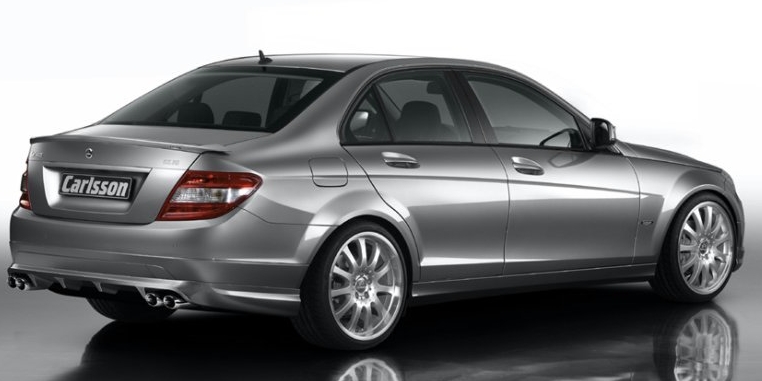
Carlsson, a German car tuning company and manufacturer that specializes in tuning Mercedes-Benz models has released their latest product on the market. The tuning company built the Carlsson CK35 based on the Mercedes-Benz C 350, which belongs to the extensive lineup of Mercedes-Benz C-Class models.
The CK35 combined the luxurious and sporty attitude of the Mercedes-Benz C-Class models with the racing characteristics and success of Carlsson in the VLN Long Distance Trophy at the Nürburgring, Germany. Inside, the CK35 gets high-quality interior materials from Carlsson similar to those materials used by Mercedes-Benz in the interior parts of the ppular S-Class models. The CK35 features an ergonomically designed Carlsson sports steering wheel that comes in different trim options including leather, Alcantara, or wood. This will provide a firm and pleasant grip on for the driver, as well as giving an excellent riding feel.
The CK35 is equipped with a race-proven performance kit specifically developed for long distance racing events. Rolf Hartge, Chief Executive Officer of Carlsson said that this piece of high-tech engineering has been breathed on to ensure durability and great efficiency.
Under the hood of the Carlsson CK35 is a power plant that is based on the 3.5 litre V6 engine found on the Mercedes-Benz SLK models. The Carlsson engine pumps out 295 hp (217 kW) and pulls out a maximum torque output of 283 lb.-ft. (385 Nm). Zero to 62 mph acceleration can be achieved in just 6.0 seconds time, throttling with a maximum speed of 167 mph. The race-proven CK35 performance kit also comes with a stainless-steel sports rear silencer with four oval tailpipes, sports air filter, and an improved engine electronic control system (ECU).
As for a sports car, Carlsson equipped the CK35 with an aerodynamic kit to provide additional dynamic performance as well as sporty and elegant appearance. Carlsson's aerodynamic kit for the CK35 comes with a front apron, a diffuser-look apron at the rear, side mouldings, a rear spoiler, electro-polished grille insert, double-headlight units, fog lights, and uniquely shape tail lights unlike the VW tail lights on the VW Eos with oval-circle shape.
carlsson wallpaper
carlsson wallpaper
carlsson wallpaper
carlsson wallpaper
carlsson wallpaper
carlsson wallpaper
carlsson wallpaper
carlsson wallpaper
carlsson wallpaper

Sunday, June 1, 2014

The First Chrysler Vehicle Made

Chrysler was once one of the largest in the industry in car production. It was one of the most innovative in terms of influencing the way engineering was done in the future and, though it had many highs and lows, the big mark it made in the automobile industry is how it set the bar for the way cars should be produced for many years to come. A look into the history of Chrysler will help to understand why Chrysler was so successful.
Chrysler was founded by William Chrysler in 1925. William Chrysler, originally was part of Maxwell Motor Company, but was eventually named the founder of the new Chrysler Corporation. The first Chrysler vehicle made its appearance in 1924. It was designed with many new features that were non-existent at that point in time for most vehicles. These features include carburetor to filter the air and fuel that goes into the engine. Another feature is the compact engine, which allows the engine to be more efficient when drawing from the air and fuel available. Full-pressure lubrication allowed the engine to live much longer when combined with the oil filter, which was also provided.
Another invention that was among the first of its kind was the four-wheel hydraulic brakes. In automobiles today, other than the accelerator which forces the car to move, the brakes are the most important aspect in a car. Without brakes, the car is unable to stop, but Chrysler Corporation knew that there had to be a way to make stopping the car easier and came up with hydraulic brakes. If it wasn't for Chrysler, automobiles may not have ever been an important necessity to people.
Another first for the world of automobiles provided by Chrysler was the ridged rim for wheels. The purpose of the ridged rim was to keep a flat tire from falling off the wheel. Safety is a very overlooked part of automobile mechanics and, while it still may not be an important aspect for many people, it was for Chrysler and it is another widely used invention for automobiles.
Chrysler is the producer of many very famous car brands, most notably Plymouth and Dodge. Chrysler sorted the brands by price and usefulness. Plymouth was meant for the lower priced cars, while DeSoto and Dodge were for higher quality vehicles. Chrysler released a brand for trucks called Fargo, as well. By the 1950s, Imperial was known as the top automobile available in Chrysler, and not long after that, the Plymouth Valiant took the top spot.
chrysler wallpaper
chrysler wallpaper
chrysler wallpaper
chrysler wallpaper
chrysler wallpaper
chrysler wallpaper
chrysler wallpaper
chrysler wallpaper
chrysler wallpaper